11 Smart Small Bedroom Layout Ideas To Maximize Space
Finding smart small bedroom layout ideas often feels like solving an impossible puzzle. You need space for a queen-sized bed, a desk for work, and storage for clothes, but your floor plan seems to suggest you can only pick two.
The secret to a functional small room isn’t necessarily buying smaller furniture—it’s about choosing the right configuration. Whether you are dealing with a narrow rectangular room or a tight square box, these 11 layouts will help you unlock hidden space you didn’t know you had. From vertical lofts to clever “floating” furniture, here is how to make every inch count.
Table of Contents
- 1. The “Corner Tuck” Layout (Maximizing Floor Space)
- 2. The Classic Centered Layout (Symmetry in Small Spaces)
- 3. The “Window Anchor” Placement (Breaking the Rules)
- 4. The Long and Narrow “Zoning” Layout
- 5. The “Bridge” Layout (Over-Bed Storage)
- 6. The Lofted Layout (Doubling Square Footage)
- 7. The “Floating” Furniture Arrangement
- 8. The Foot-of-the-Bed Desk Layout
- 9. The Built-In Wardrobe Wall Layout
- 10. The “Daybed” Layout (Multifunctional Guest Room)
- 11. The Visual Expansion Layout (Mirrors and Rugs)
- Conclusion – Small Bedroom Layout Ideas
1. The “Corner Tuck” Layout (Maximizing Floor Space)
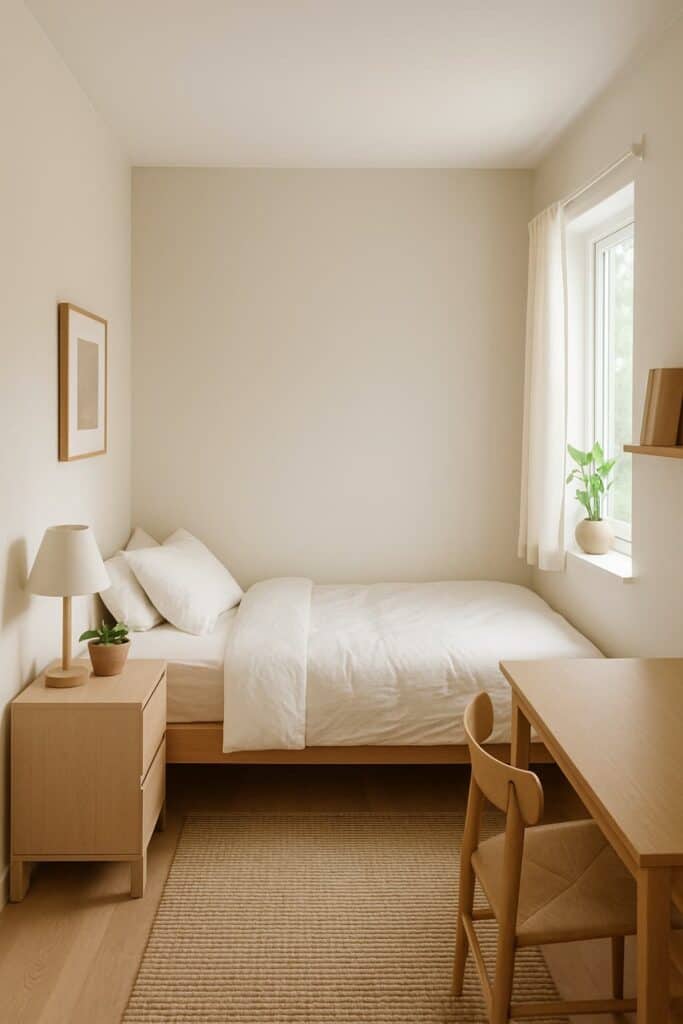
In a standard room, we are taught to center the bed. But in a tiny room, centering the bed cuts your floor space in half.
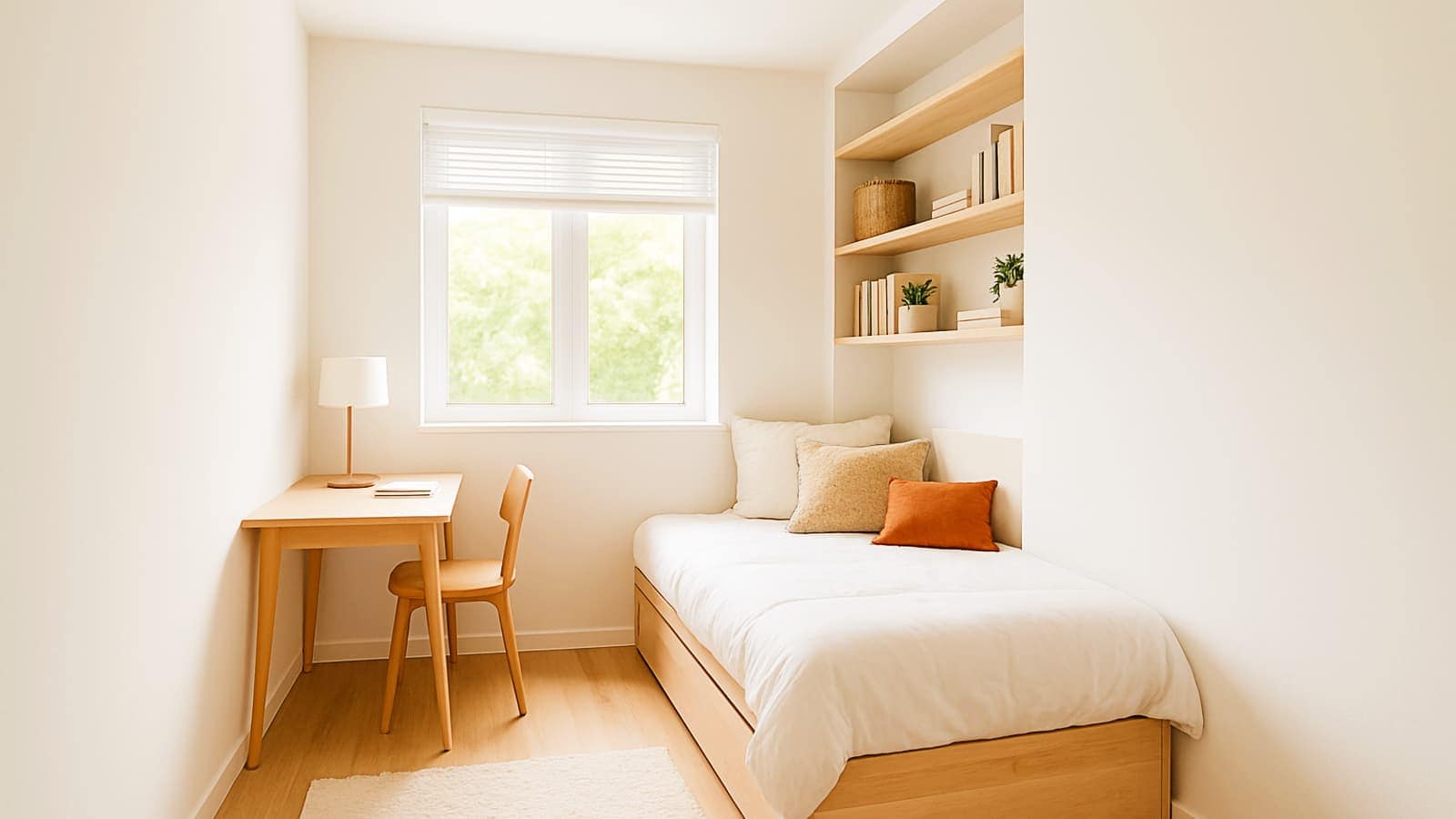
The “Corner Tuck” involves pushing your bed flush against a corner wall. This opens up a large, continuous block of floor space in the center of the room, giving you enough room to add a desk or a dresser without blocking the walkway. It’s the single most effective layout change for rooms under 100 square feet.
2. The Classic Centered Layout (Symmetry in Small Spaces)
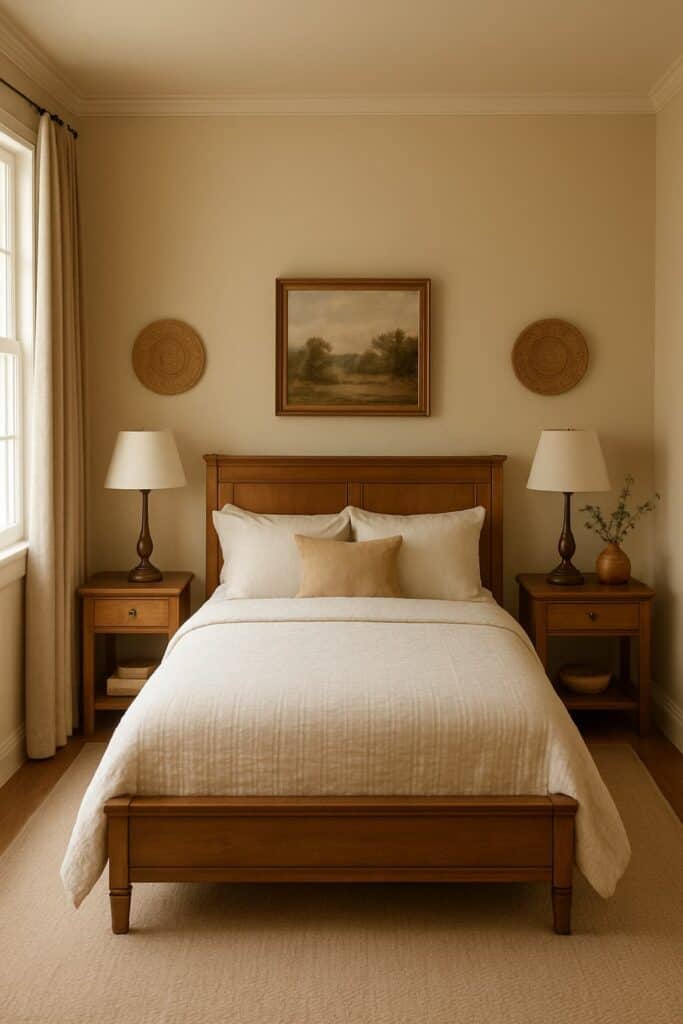
If you have just enough width, the classic centered layout is still the best for visual balance and airflow. It works best when you prioritize the bed above all else.
Center the bed on the main wall and use matching nightstands. To make this work in a tight space, choose slim, open-leg nightstands or floating shelves instead of bulky chests. This symmetry tricks the eye into thinking the room is grander than it is.
3. The “Window Anchor” Placement (Breaking the Rules)
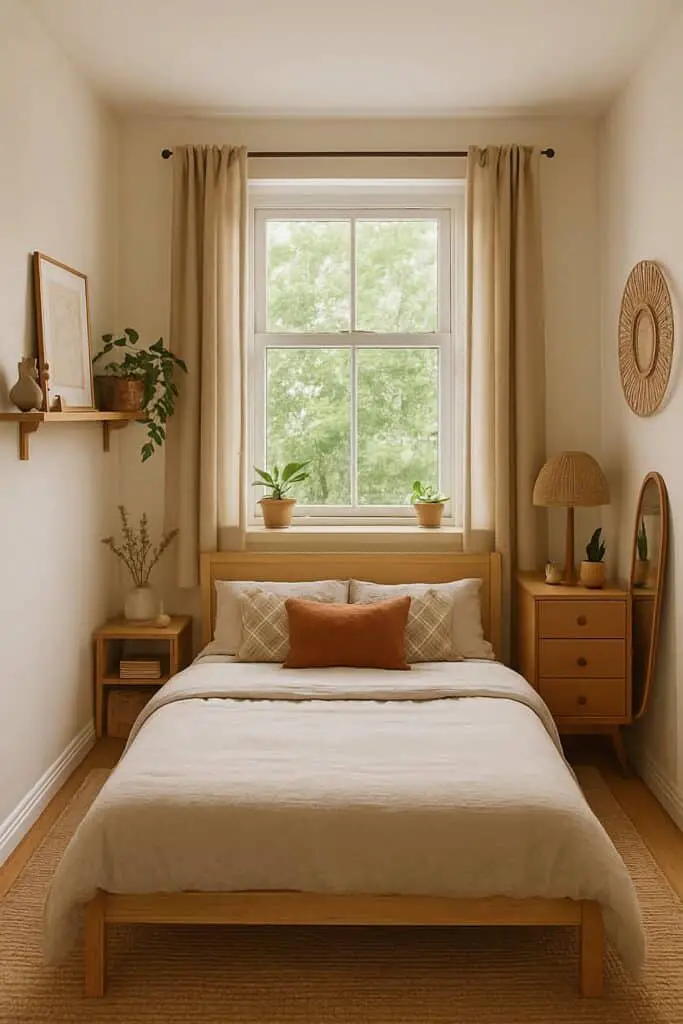
Design rules often say “never block a window,” but in a small bedroom, the window wall might be the only spot for a bed.
Anchoring your bed in front of the window can actually be a smart move. It frees up your solid walls for taller furniture like wardrobes or desks that can’t go in front of a window. Use low headboards to minimize blocked light, and frame the bed with floor-to-ceiling curtains to create a dramatic focal point.
4. The Long and Narrow “Zoning” Layout
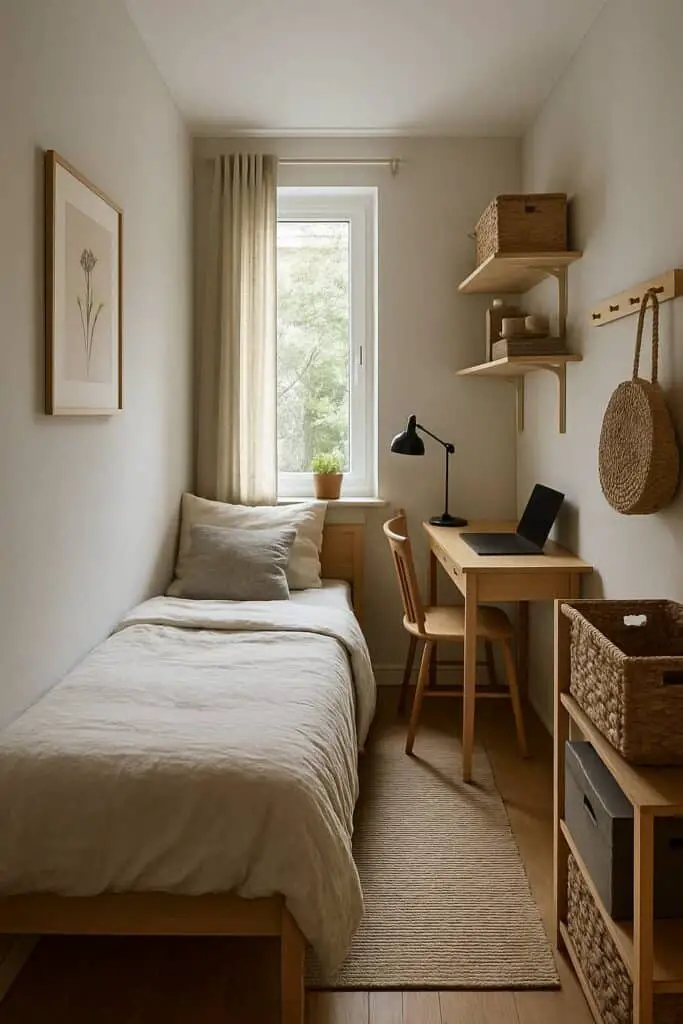
Long, narrow rooms (often called “bowling alley” bedrooms) are notoriously hard to style. The solution is “Zoning.”
Place your bed at one far end of the room to create a dedicated “Sleep Zone.” Use the remaining length of the room for a completely separate “Work Zone” or dressing area. By treating the room as two distinct squares rather than one long rectangle, you prevent the space from feeling like a hallway.
5. The “Bridge” Layout (Over-Bed Storage)
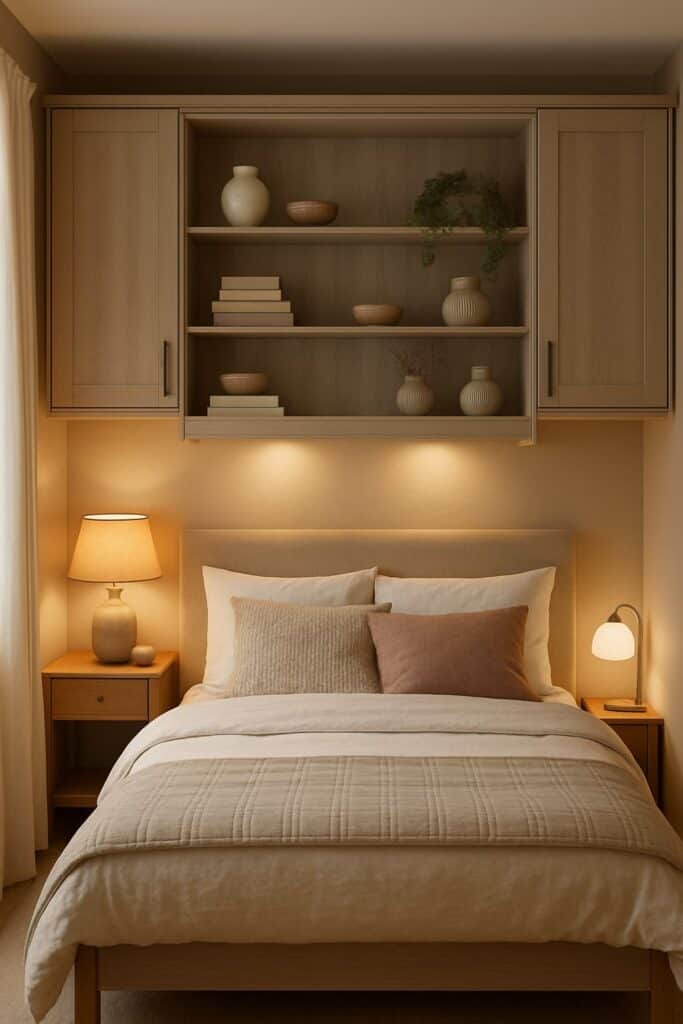
When you have run out of floor space, look up. The space above your headboard is the most underutilized real estate in a bedroom.
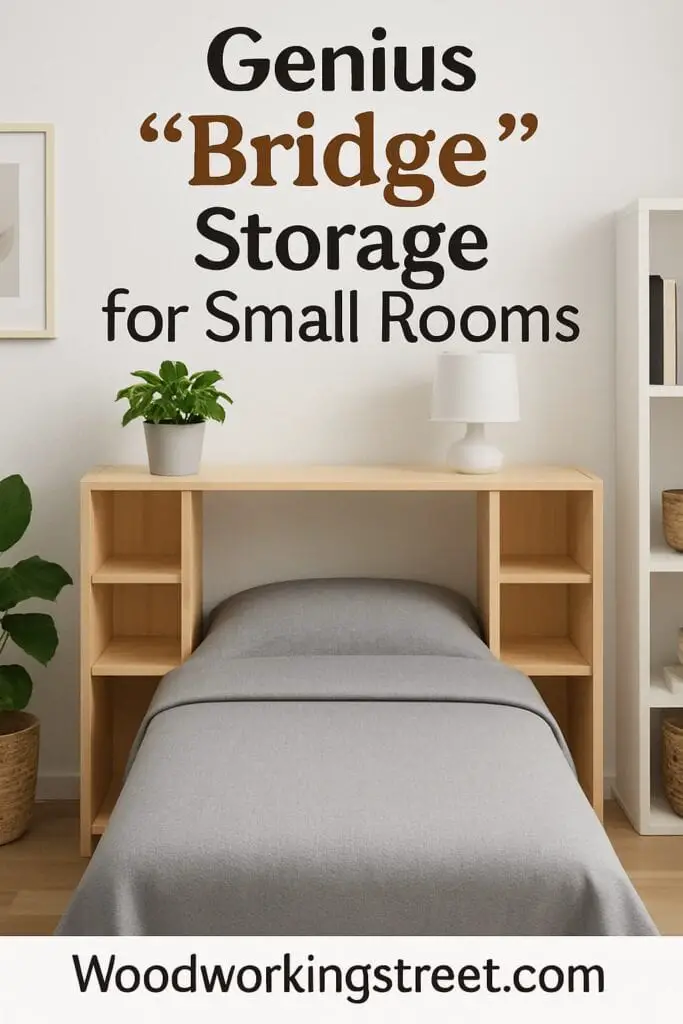
The “Bridge” layout uses vertical cabinetry to create an arch of storage around the head of the bed. By installing tall wardrobes on either side and connecting them with a shelf or cabinet above, you create a built-in look that replaces the need for a separate dresser, saving massive amounts of floor space.
6. The Lofted Layout (Doubling Square Footage)
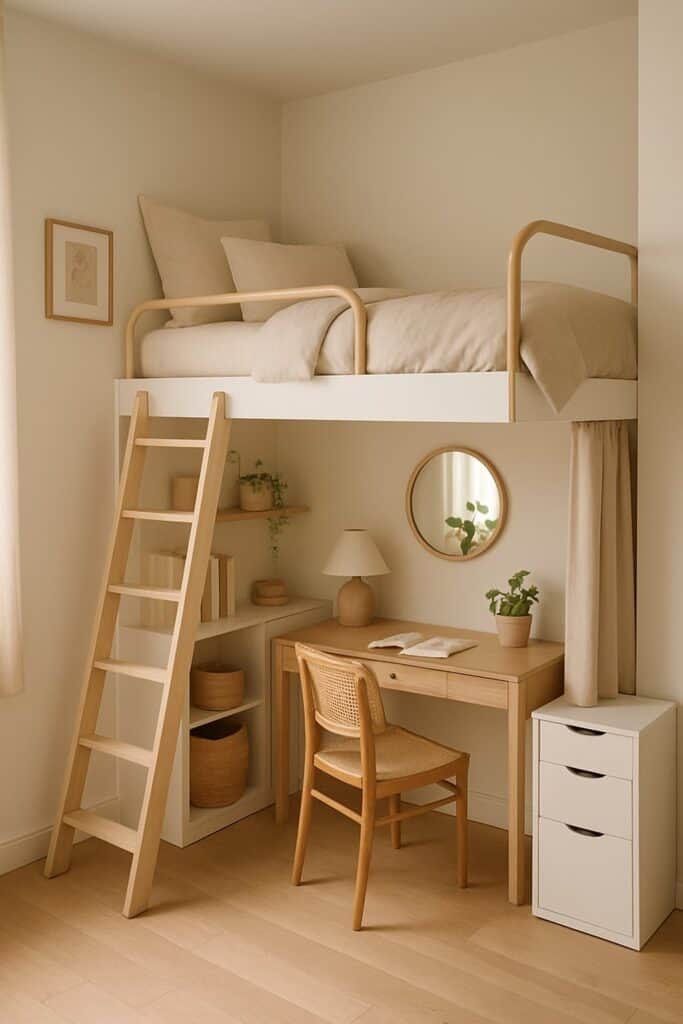
For the ultimate space-saving hack, you have to think vertically. Lofting your bed essentially doubles your usable square footage.
By raising the sleeping platform, you reclaim the entire floor area underneath. This is the perfect spot for a dedicated home office, a cozy reading den, or extra dresser storage. It is the go-to layout for studio apartments and dorms where every single foot matters.
7. The “Floating” Furniture Arrangement
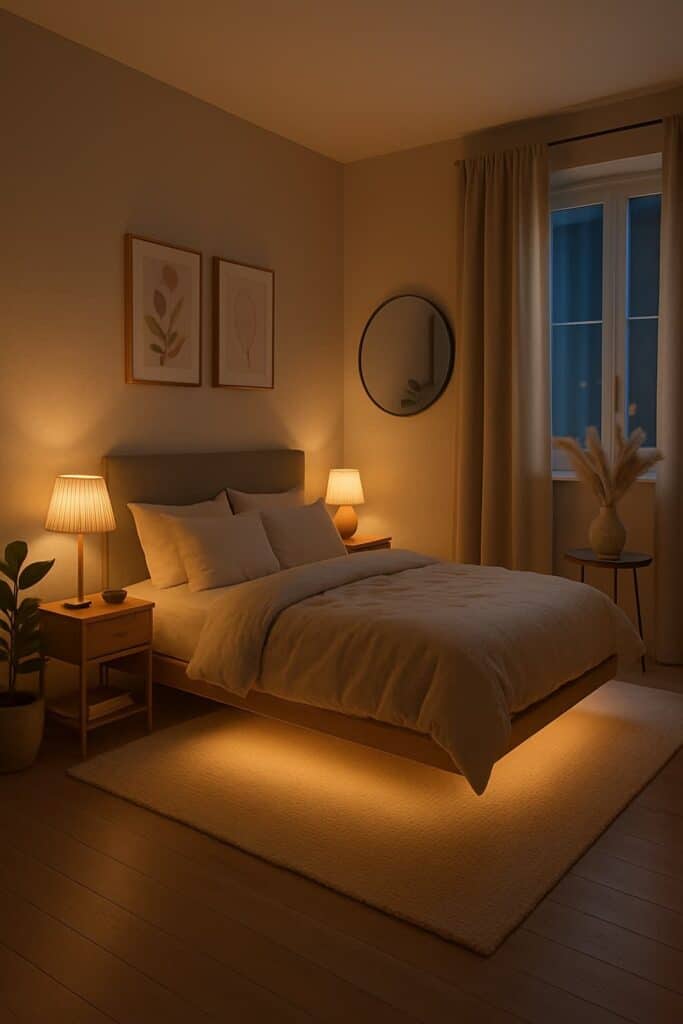
Heavy, blocky furniture makes a small room feel smaller because it eats up visual floor space. The “Floating” layout uses wall-mounted furniture to create an optical illusion.
Use a floating bed frame (mounted to the wall or with hidden legs) and floating nightstands. Seeing the floor extend all the way to the wall underneath your furniture makes the room feel wider and more open. Adding LED strip lighting underneath enhances this levitating effect.
8. The Foot-of-the-Bed Desk Layout
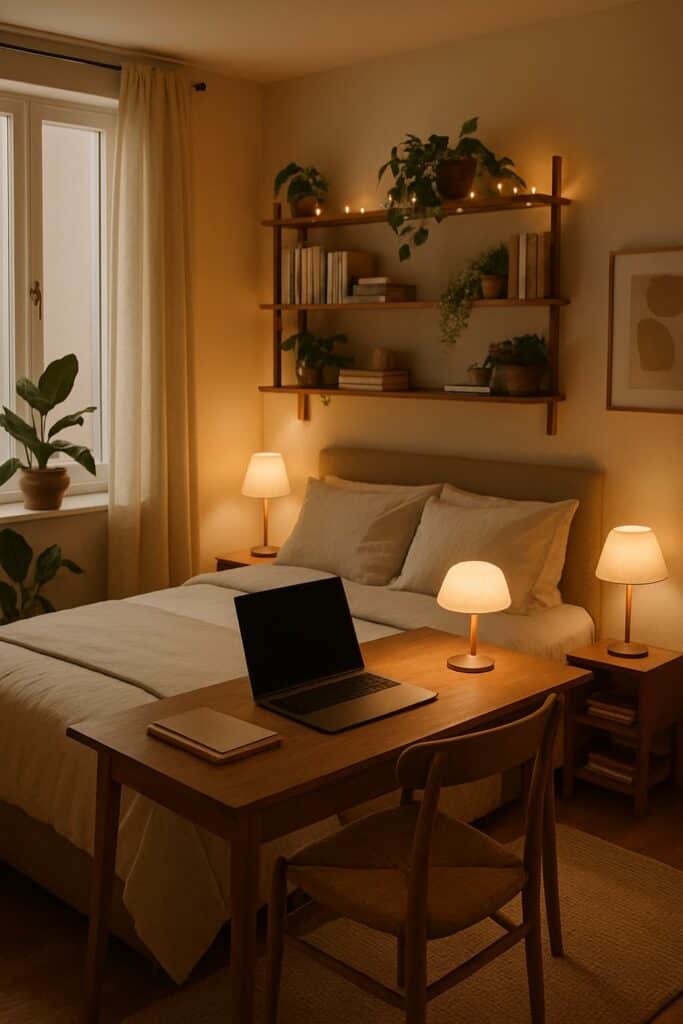
Struggling to find a spot for a desk? Stop pushing it against a wall and try placing it at the foot of your bed.
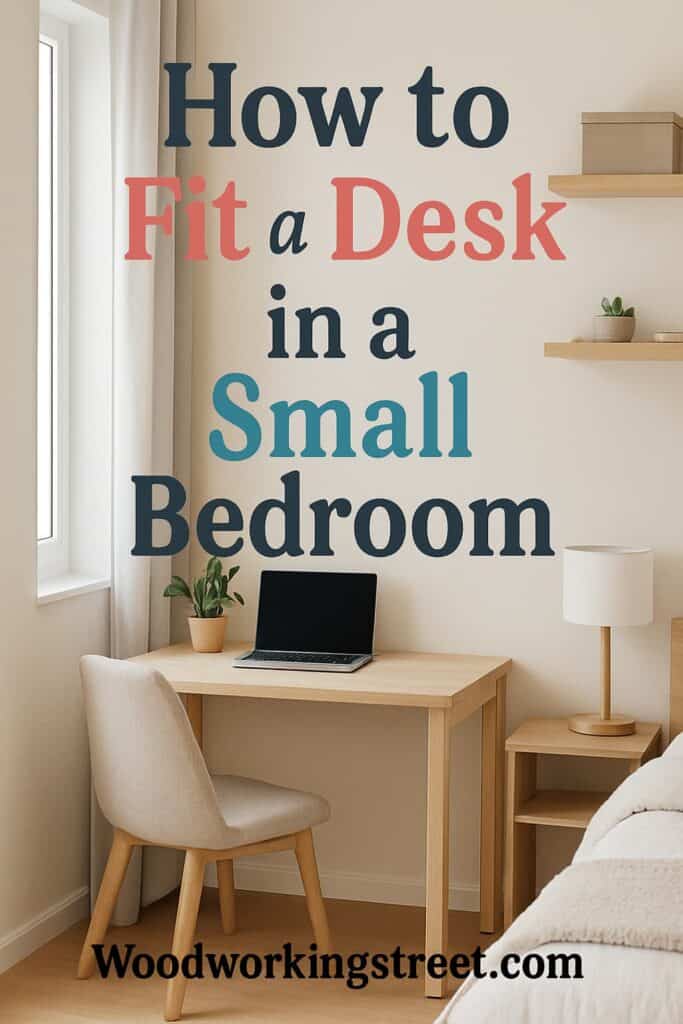
This layout works brilliantly in square rooms. The desk acts as a “footboard,” defining the sleeping area while utilizing the dead space in the center of the room. It also allows you to watch TV on your monitor from bed—a nice bonus for small-space living.
9. The Built-In Wardrobe Wall Layout
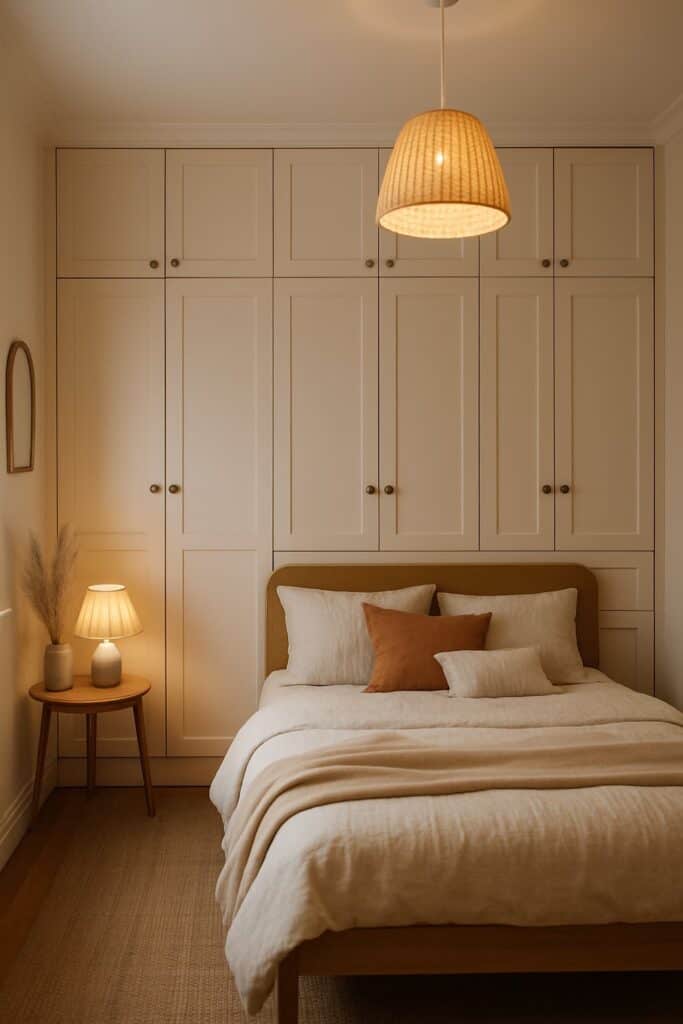
Clutter is the enemy of small spaces. If you have a lot of clothes, a standalone rack will make the room look messy.
The solution is a “Wall of Storage.” Dedicate one entire wall to floor-to-ceiling built-in wardrobes. By painting them the same color as the walls, they disappear visually while providing massive storage capacity. This keeps the rest of the room clean, breathable, and minimalist.
10. The “Daybed” Layout (Multifunctional Guest Room)
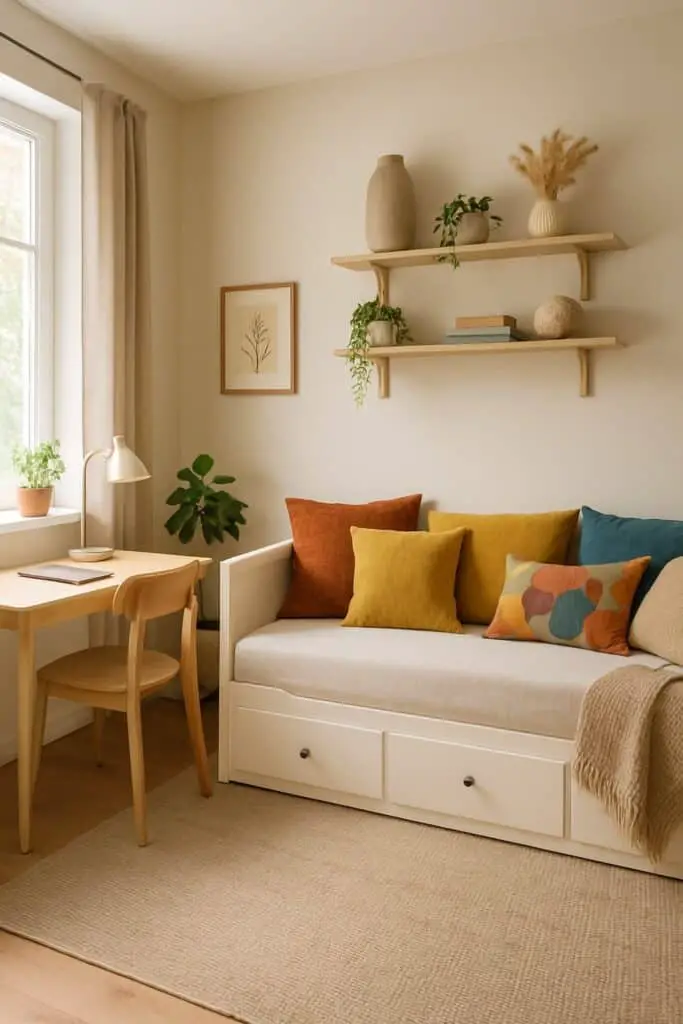
If your small bedroom doubles as a home office or guest room, a traditional bed might dominate the space too much.
Opt for a daybed layout. Pushing the long side of the bed against the wall and styling it with bolsters and pillows gives it a sofa-like appearance during the day. This creates a functional “living room” vibe for working hours and easily converts to a comfortable bed at night.
11. The Visual Expansion Layout (Mirrors and Rugs)
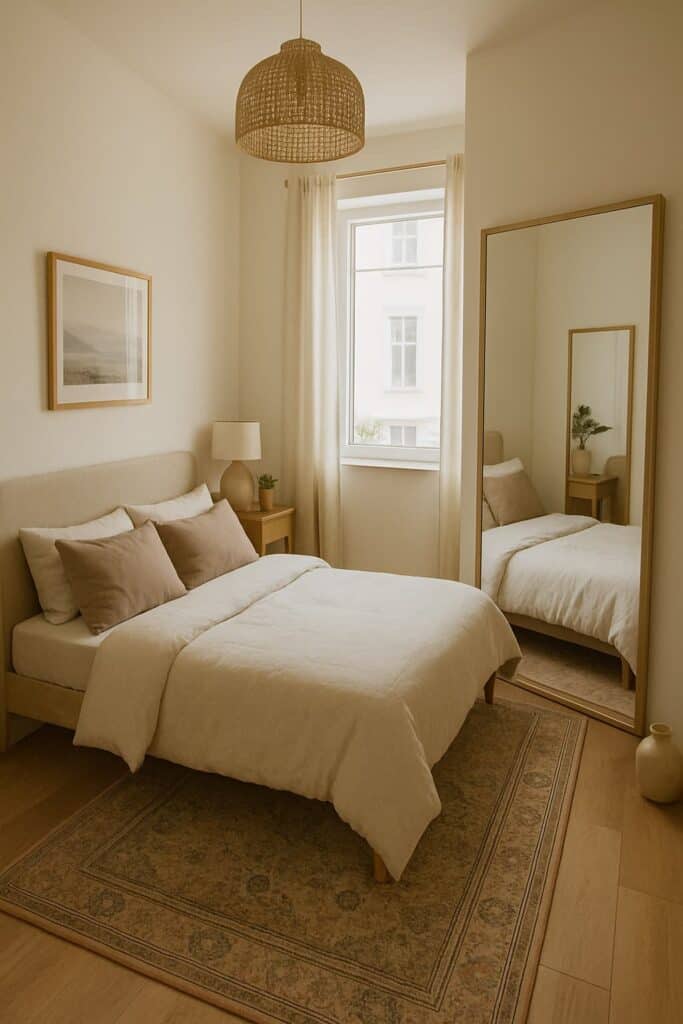
Finally, sometimes the layout isn’t about moving furniture—it’s about visual trickery.
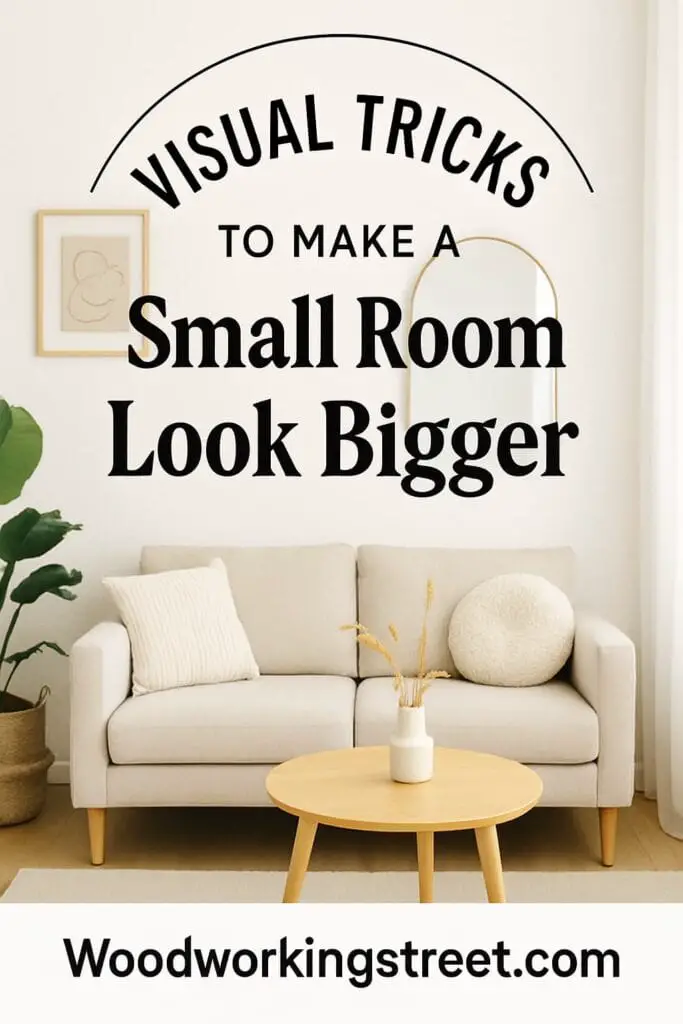
Place a large floor mirror (at least 65 inches tall) on the wall opposite your window or door. It acts like a “second window,” bouncing light and doubling the visual depth of the room. Pair this with a large rug that slides under the bed—a rug that is too small will make the room feel chopped up, while a large rug draws the eye wide.
Conclusion – Small Bedroom Layout Ideas
A small bedroom doesn’t have to feel cramped. By rethinking your layout—whether it’s tucking the bed in a corner, lofting it for workspace, or using vertical storage bridges—you can create a room that is functional, organized, and surprisingly spacious.